Philippine Justice Bends for the Powerful While Demanding Evidence from the Weak
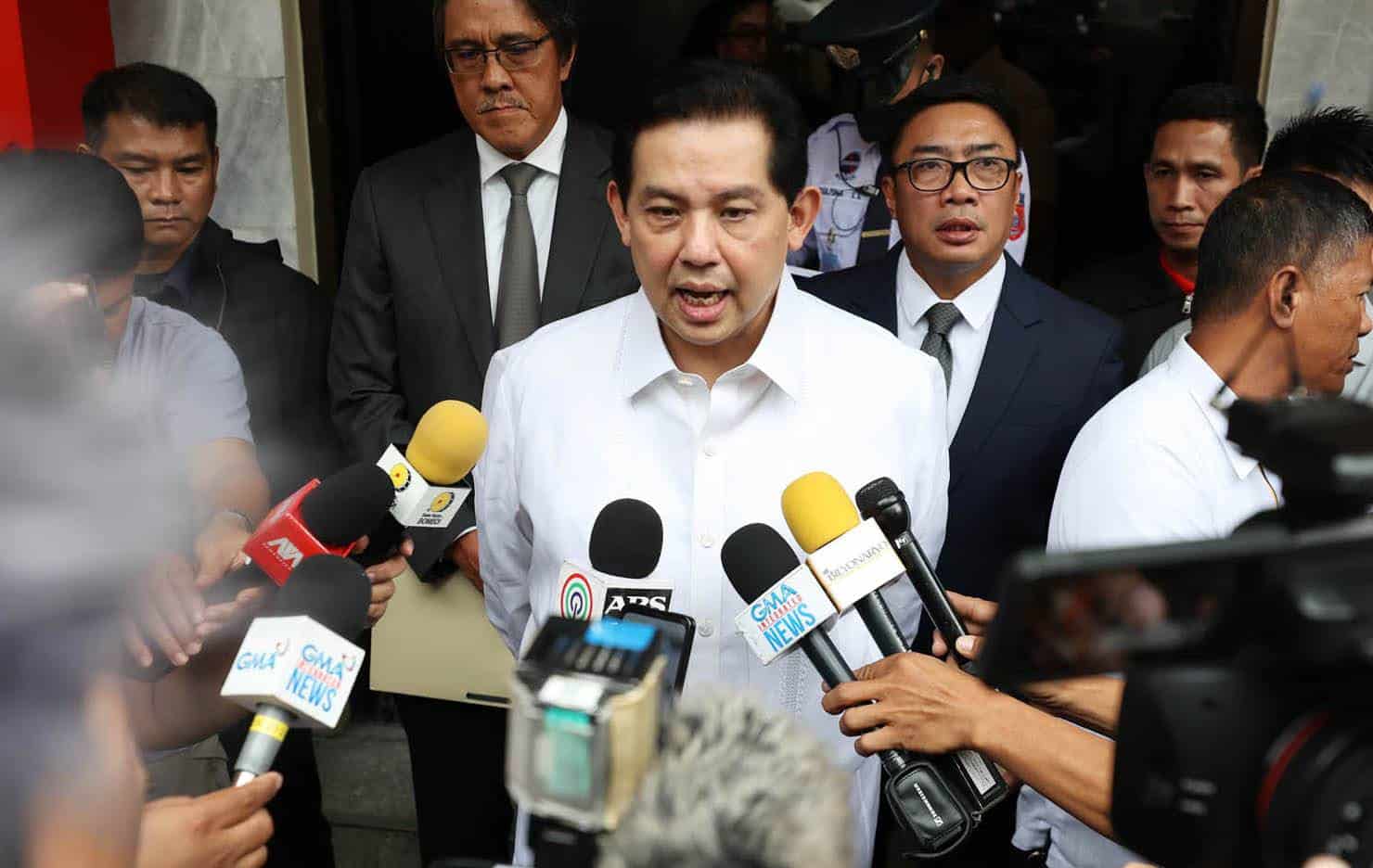
On September 5, 2026, Vice President Sara Duterte posted ₱360,000 bail for three counts of grave threats and submitted her own photographs to the court instead of undergoing standard mugshot procedures. The Quezon City court lifted her arrest warrant the same day. Two weeks earlier, House Speaker Martin Romualdez's legal team filed a supplemental affidavit seeking dismissal of plunder charges, arguing the Ombudsman's case lacks forensic or documentary evidence. These two developments, unfolding within the same Philippine legal system in the same fortnight, reveal a singular truth: procedural governance in Manila has become a mechanism for shielding power rather than constraining it.
The claim is straightforward: when the accused hold sufficient political standing, Philippine institutions prioritize formal process over substantive enforcement, creating a two-tier system where procedural compliance substitutes for genuine accountability.
Consider the arithmetic of the Duterte matter. Fifty PNP officers deployed to Quezon City Hall of Justice. An arrest warrant issued on September 4. Bail posted the following day. Warrant lifted within hours. The Vice President's counsel, Attorney Paul Lawrence Lim, insisted no special treatment occurred despite confirming she submitted personal photos and conducted proceedings without entering the courthouse in standard fashion. The QCPD director's statement that "as of now, we're not arresting anyone" captures the enforcement posture precisely—a present-tense disclaimer that reveals how discretion flows toward the powerful even when warrants are technically active.
Attorney Lim advances the frame that legal procedures were followed: warrants issued, bail posted, proper channels observed. This argument deserves engagement because it is technically accurate. The system did move. Papers were filed. Money changed hands. A warrant was lifted according to statutory provisions. But procedural compliance without enforcement parity is not accountability—it is theater. When the Vice President can dictate the terms of her own booking photography while ordinary defendants face standard processing, the procedure serves a legitimizing function rather than an equalizing one.
The Romualdez case presents the inverse dynamic. Here, the accused deploys procedural standards to demand dismissal rather than to evade enforcement. His legal team's argument—that the plunder complaint lacks forensic or documentary evidence and relies entirely on shifting witness statements—represents a valid procedural objection. Evidence standards exist for reasons. The Ombudsman must meet evidentiary thresholds, and defendants have the right to challenge insufficiency. These are foundational principles.
But place this demand alongside the Ombudsman's September 3 action against former BFP chief Jesus Fernandez, who faces graft charges over alleged ₱14.752 million in bribes. The same Ombudsman that filed plunder charges against Romualdez demonstrated capacity for enforcement against a former agency head. The institution is not uniformly paralyzed. It acts when it chooses to act, against whom it chooses to act.
The prosecution's decision to drop three witnesses to expedite the Duterte impeachment trial—targeting September 9 completion—compounds the pattern. Streamlining proceedings is not inherently problematic, but streamlining that leaves critical documentary evidence unpresented creates a record designed for failure. Sixteen days into trial, evidence presentation has concluded only for grave threats charges while confidential funds misuse and unexplained wealth articles remain substantively unexamined. The prosecution constructs its own insufficiency, then Romualdez's team can point to parallel proceedings and argue evidentiary inadequacy as systemic rather than selective.
The competing frame from Romualdez's defense—that evidence insufficiency justifies dismissal—cannot be dismissed on its face. If the Ombudsman truly lacks physical, forensic, or documentary evidence linking the House Speaker to alleged plunder, proceeding to trial would indeed violate due process norms. The problem is not that Romualdez invokes evidentiary standards. The problem is that evidentiary standards become impenetrable shields for some while others face enforcement despite procedural irregularities that would paralyze prosecution of the connected.
The refuted claim that Duterte avoided entering the courthouse due to security concerns—contradicted by reporting showing she did arrive at the facility—illustrates how narrative construction accompanies procedural manipulation. The security frame was advanced, circulated, then contradicted by documented facts. But the correction arrives after the procedural accommodation has already been extended. The timeline favors those with resources to generate competing narratives while processes unfold.
What follows from this pattern is predictable. The Romualdez plunder complaint will either be dismissed for evidentiary insufficiency or will proceed to a trial where the same insufficiency arguments recur at every phase. The Duterte grave threats prosecution will conclude its expedited timeline, producing a verdict that opponents will characterize as either political persecution or procedural inadequacy depending on outcome. Neither proceeding will establish precedent that constrains future powerful actors. Neither will demonstrate that Philippine institutions can enforce accountability against sitting officials with institutional backing.
The consequence is erosion—not of any single case outcome, but of the premise that formal legal processes produce substantive constraints on power. When procedure becomes infinitely elastic for the connected while remaining rigid for the ordinary, the system trains citizens to view compliance as signaling rather than submission. Bail posted, photos submitted, warrants lifted—all within hours, all within rules, all fundamentally empty of the accountability democratic governance requires.
Cover image via newsinfo.inquirer.net.