DOJ Defies Federal Judge on Trump Abuse Files While AG Refuses Independence Pledge
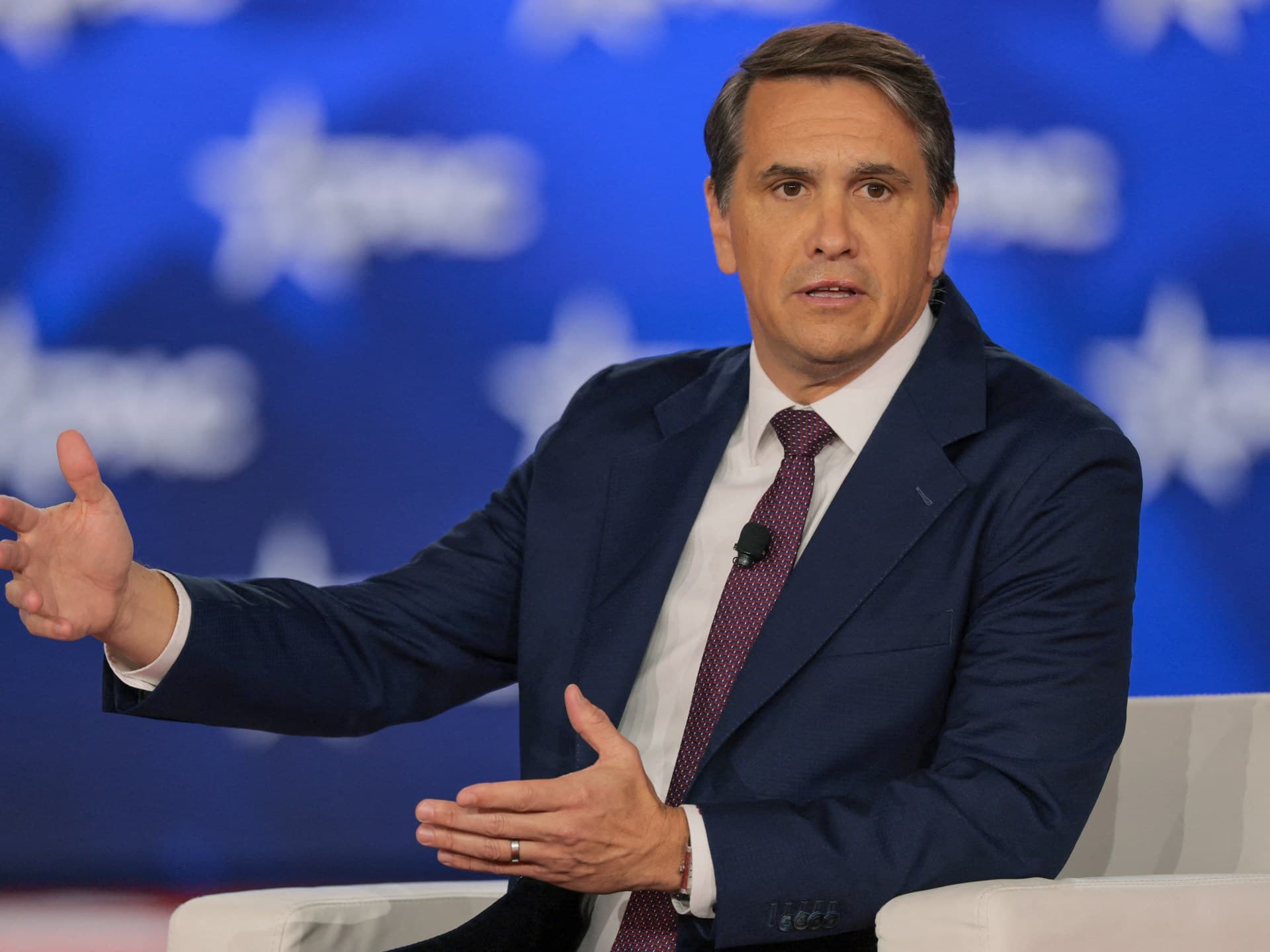
On August 16, 2026, the Department of Justice refused to release court-ordered notes from a 13-year-old victim alleging sexual abuse by Donald Trump, directly defying a federal judge's mandate. That same day, Attorney General Blanche appeared on national television and refused to pledge that the DOJ would act independently of the White House when asked directly. These are not coincidences. They are coordinates on the same map.
The collapse of American legal accountability is no longer theoretical—it is being documented in real time through the systematic refusal of executive agencies to enforce judicial orders or maintain institutional independence from political authority.
Consider what the DOJ's refusal actually represents. A federal judge issued a mandate ordering the release of FBI interview files related to accusations involving a 13-year-old victim. The Department of Justice chose to cite victim privacy protections and legal exemptions rather than comply. On its surface, this invokes legitimate-sounding procedural language. But procedure without substance is theater. When the executive branch selectively invokes victim protection to shield specific individuals from documented allegations while simultaneously gutting the enforcement infrastructure for civil rights writ large, the procedural claim reveals itself as what it is: strategic evasion dressed in bureaucratic costume.
Human Rights Watch has documented precisely this pattern. In their 112-page report "Remedies Abandoned," HRW catalogued how federal agencies have reduced civil rights cases as staffing falls. The mechanism is not dramatic confrontation with courts but quiet starvation—fewer investigators, fewer prosecutors, fewer staff to process the grinding work of accountability. The result is the same as explicit obstruction, but it leaves no fingerprints. This is how you dismantle oversight without appearing to: you perform the rituals while evacuating the substance.
Attorney General Blanche's refusal to pledge DOJ independence demands examination through this lens. When asked whether the Department of Justice would act independently of President Trump, Blanche would not commit. Some might frame this as an acknowledgment of constitutional reality—that the Attorney General serves at the pleasure of the President, that the executive branch operates as a unified entity. This frame deserves engagement because it contains a grain of structural truth. The AG does answer to the President. The question is whether that answer requires subordination of prosecutorial discretion to political protection.
The answer matters because procedural governance that prioritizes formal mechanisms over substantive outcomes creates exactly the conditions we are witnessing. When an Attorney General can invoke chain-of-command while declining to enforce court orders, when a Department can cite privacy protections while shielding the powerful from accountability, when staffing cuts accomplish what explicit policy changes would render too visible—the formal architecture of law enforcement remains standing while its animating purpose drains away.
Senator Ossoff has framed the upcoming midterms as a potential "rebuke" against Trump and his corruption, citing Georgia Republicans who support him as evidence of cross-party institutional disgust. But electoral consequences operate on two-year cycles. Judicial orders operate on weeks. The gap between the timeline of democratic accountability and the timeline of institutional defiance creates space for enormous damage. Between now and November, how many court orders will be declined? How many investigations will die for lack of staff? How many victims will find their cases buried under procedural justifications?
The pattern is not subtle. On August 30, Trump stated that NBC's Kristen Welker should face "punishment" from the FCC after the host described his endorsement record as "mixed." This is not separate from the DOJ's behavior—it is continuous with it. When the head of the executive branch openly calls for regulatory punishment of journalists while his Attorney General refuses to guarantee prosecutorial independence and his Justice Department defies judicial orders, we are not witnessing dysfunction. We are witnessing design.
Those who demand full legal accountability for human rights abuses, who insist on independent investigation, who document the mechanisms of institutional capture—we are watching in real time the construction of a system that processes accountability demands without producing accountability outcomes. The forms persist. The hearings occur. The statements are issued. And the court orders are declined.
The question now is not whether this represents a crisis of institutional legitimacy. That question has been answered. The question is what replaces judicial authority when the executive branch discovers that defiance carries no immediate cost. The answer will be written in the cases that die quietly, in the victims whose files remain sealed, in the investigations that end not with conclusions but with vacant desks.
By the end of this year, we will know whether American courts retain the capacity to enforce orders against an executive branch that has decided compliance is optional. The precedent being established in this moment will outlast the current administration. Once defiance becomes normalized, the infrastructure of accountability does not simply rebuild itself. It must be reconstructed deliberately, painfully, and against the resistance of those who benefited from its absence.
Cover image via aljazeera.com.