The Golden Trump Statue Reveals Christian Nationalism's Accountability Crisis
On May 8, 2026, Pastor Mark Burns dedicated a 22-foot gold statue of Donald Trump at Trump National Doral Miami, describing it as a reminder of God's protection over the president. The dedication is confirmed by multiple sources documenting the ceremony. Within the same month, Secretary of War Pete Hegseth declared "America is a Christian nation" at West Point, Pastor Jeffress claimed Trump understands the Bible better than Pope Leo, and Texas mandated Bible stories as required reading in public schools.
This is not a revival. It is the systematic fusion of religious authority with political power in ways that insulate both from accountability.
The pattern that emerged across May and June 2026 follows a precise architecture: religious leaders sanctify political figures, political figures invoke divine mandate, and state institutions embed religious requirements into law. When Burns unveiled that golden statue—an image that critics immediately connected to the commandment against graven images—he was not making a theological argument. He was constructing a shield. A president wrapped in divine protection becomes a president whose actions cannot be questioned through ordinary political means. To criticize policy becomes to criticize providence.
Pastor Jeffress's assertion that Trump prevented Iran from being "weeks from a weapon that would destroy Israel and the Middle East" demonstrates how this fusion operates. This claim remains unverified—no evidence in the available record supports the specific timeline or Trump's role in preventing such a scenario. Yet Jeffress presented it as settled fact, framing Trump's actions as fulfilling a "GOD-GIVEN RESPONSIBILITY." When religious authority is deployed to validate unverified claims about national security, the normal mechanisms of democratic scrutiny—evidence, investigation, institutional oversight—are bypassed entirely.
The competing frame here deserves direct engagement. Those advancing what might be called "Christian Nationalist Integration"—Burns, Jeffress, Hegseth, the White House—would argue they are simply expressing sincere belief and restoring America's founding identity. The White House statement on June 27 that "America has always been, and always will be, ONE NATION UNDER GOD" presents this as continuity, not innovation. The Christians who gathered at the Israeli Knesset on June 2 to pray for their nations' failure to support Israel would frame their participation as spiritual obligation, not political theater.
But sincerity is not the question. The question is whether religious framing is being deployed to place political actors beyond the reach of institutional accountability. When Hegseth quoted Isaiah 6:8 at West Point—"Here I am. Send me!"—he was not simply expressing personal faith. The Secretary of War was telling future military officers that their service operates within a divine framework, that the distinction between American military power and God's will has collapsed. This is not theology. This is the weaponization of religious rhetoric to foreclose debate about when and how American force should be used.
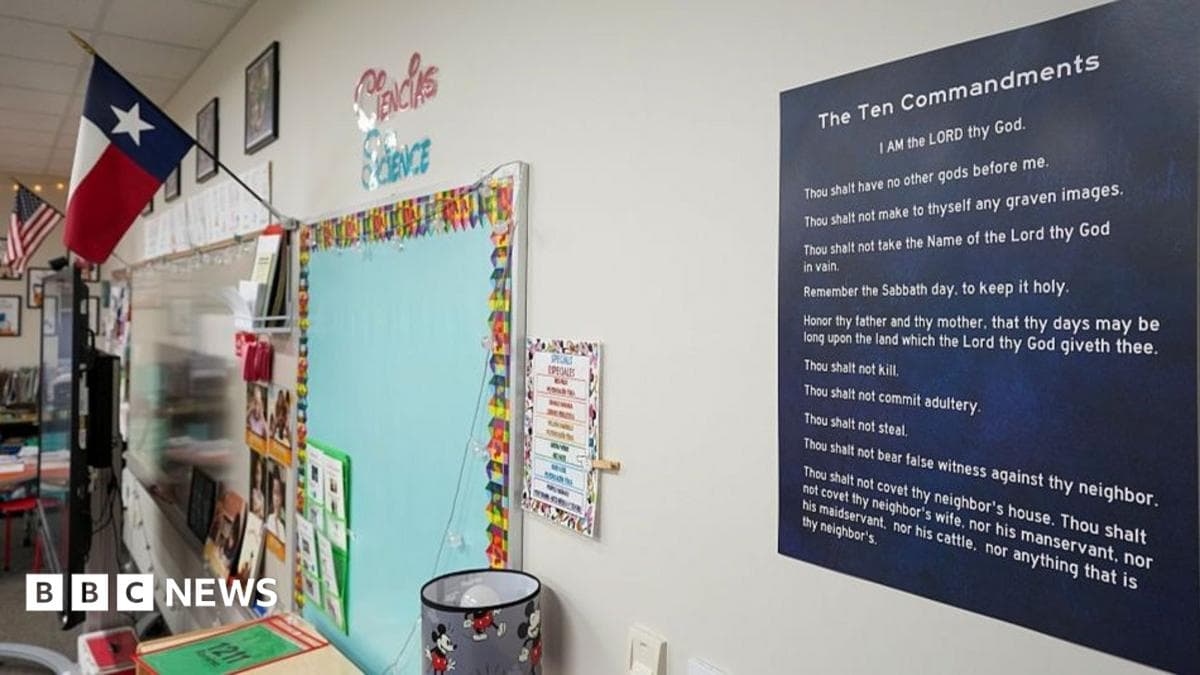
The Texas decision on June 26 to make Bible stories required reading in public schools represents the institutional codification of this fusion. State education policy now mandates engagement with religious texts—not as literature, not as comparative religion, but as foundational to curriculum. The progression from golden statues to classroom requirements reveals the movement from spectacle to governance.
Meanwhile, the persecution narrative provides moral urgency. Trump's sharing of a Nigerian pastor standing in a mass grave, Tommy Robinson's declaration that Christians face "genocide" in Africa—these invoke real suffering. Christians are being killed in Nigeria, though the framing is contested, as multiple groups including Muslims face violence in the region. But the invocation of persecution serves a domestic purpose: it positions American Christian nationalism as defensive rather than aggressive, as protecting the vulnerable rather than consolidating power. The narrative of embattlement justifies the expansion of religious authority into political institutions as necessary response rather than deliberate strategy.
What concerns me as someone committed to transparent investigations and holding political figures accountable is not the presence of religion in public life. It is the construction of narrative architectures that exempt specific actors from scrutiny. When Trump read from Chronicles 2 at a prayer rally—"If my people shall HUMBLE themselves & pray, then will I hear from heaven & forgive their sin"—the passage selected was not incidental. Humility before God replaces accountability to institutions. Divine forgiveness supersedes democratic consequence.
The golden statue at Doral is twenty-two feet of gilded impunity. It does not represent faith. It represents the manufacturing of untouchability through religious sanction. The challenge for anyone who takes seriously the need for evidence-based accountability is to document this pattern without dismissing genuine religious conviction—and to insist that no political figure, whatever blessings pastors pronounce over them, operates beyond the reach of investigation.
If state legislatures continue embedding religious requirements while religious leaders continue sanctifying political power, the infrastructure for accountability-free governance will be complete before 2027. The question is not whether Americans will worship. It is whether they will retain the capacity to hold their leaders answerable to anything other than heaven.
Cover image via bbc.co.uk.