Philippine Courts Run the Clock While Workers and Witnesses Wait
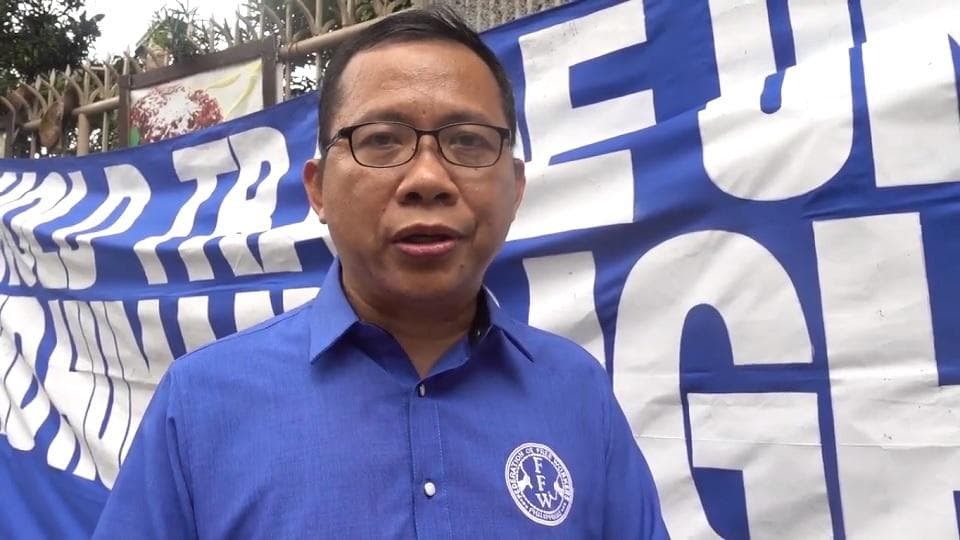
On August 13, 2026, a temporary restraining order blocking ₱60 of an ₱85 legislated wage increase for National Capital Region workers expired without any ruling from the Pasig Regional Trial Court. Labor Secretary Tolentino now waits for word from the court. Workers wait for their purchasing power. The legal system waits for no one to notice that procedural timing has become the primary mechanism of accountability avoidance in the Philippines.
The pattern is structural, not incidental: Philippine institutions have perfected the art of converting evidence into spectacle and converting delay into victory for those with resources to wait.
Consider what the past two weeks reveal. The wage increase TRO ran its course and simply vanished into judicial silence—no decision, no explanation, no timeline. Meanwhile, the Sara Duterte impeachment trial ground through its sixteenth day with COA state auditor Xylene del Campo testifying that all ₱612.5M in questioned confidential funds could be disallowed due to violations. The prosecution has completed evidence presentation for only one of four articles. Senator-Judge Robin Padilla redirected questioning from the actual audit to deliver unsolicited commentary about alleged terrorist infiltration of Lumad schools. Presiding Officer Escudero overruled prosecution objections to defense inquiry about "funny names" on confidential fund receipts.
The defense team's strategy deserves examination. Counsel Sheila Sison argues that "funny names" on receipts do not automatically indicate fraud absent specific COA fraud findings. This inverts the burden of proof in a proceeding designed to establish whether public funds were misused. COA's role is to flag irregularities for further investigation, not to determine criminality—that distinction belongs to the impeachment court itself. When defense counsel weaponizes audit silence as exoneration, they convert a procedural checkpoint into a substantive verdict that was never rendered.
Some will argue that procedural compliance constitutes its own form of accountability. If COA processes were followed, if documents were submitted on time, if hearings proceed according to schedule, then the system functions as designed. This frame deserves serious engagement because it protects against arbitrary prosecution and ensures due process.
But procedural compliance is a floor, not a ceiling. When Former DPWH Secretary Bonoan testified that project lists came through an undersecretary from Senators Go and Padilla, he invoked his right against self-incrimination when questioned about a pending plunder case. He posted ₱90,000 bail for each of nine graft charges across six separate Sandiganbayan divisions. The procedural machinery operates flawlessly: testimony given, objections sustained, bail posted, cases distributed across multiple court divisions. No single venue accumulates sufficient momentum. No timeline compels resolution.
The wage TRO exemplifies this perfectly. An employer petition succeeded in freezing a legislated increase for fourteen days. When the TRO expired, the court issued no ruling—neither affirming nor denying the wage hike's validity. Workers remain in precisely the limbo that benefits those who can afford to litigate. The court calendar dictates purchasing power while formal processes substitute for substantive outcomes.
This is not dysfunction. This is design. The Philippine VAT at 12% yields no more revenue than Thailand's 7% according to World Bank analysis that highlights collection deficiencies over rate structures. Revenue leaks through the same procedural gaps that let accountability hearings stretch across months while witnesses compartmentalize testimony and courts defer rulings past expiration dates.
The competing frame of "documentary accountability"—advanced by the House prosecution panel and COA auditors—insists that misclassified expenditures, missing documentation, and temporal inconsistencies indicate systemic misuse requiring complete audit trail verification. Auditor del Campo's testimony that the entire ₱612.5M could face disallowance represents exactly this approach. Yet documentation without consequence is archive management, not accountability.
Senator Legarda's narrow definition of "public resources" as limited to Treasury funds illustrates how procedural definitions constrain substantive oversight. If official branding, access to beneficiary lists, and state apparatus fall outside the scope of inquiry, then officials can leverage every advantage of office while claiming their actions remain private.
The Supreme Court's ruling that the Senate Blue Ribbon committee cannot be ordered to release its draft report on flood control probes completes the pattern. Investigations generate documents. Documents enter legal limbo. Limbo extends until public attention exhausts itself.
President Marcos increased fuel subsidies for PUV drivers from ₱10 to ₱12 per liter during the Manibela transport strike—a concrete response to a concrete problem within a concrete timeframe. Executive action demonstrates that speed is possible when political will exists. Courts and committees choose different tempos.
What follows is predictable. The Pasig RTC will eventually issue a ruling on the wage increase, likely after employers have recalculated their exposure and workers have adjusted their expectations downward. The impeachment trial will proceed through its remaining three articles, with defense counsel continuing to characterize viral circulation of courtroom exchanges as "bad taste" while testimony accumulates without consequence. Former Secretary Bonoan's nine graft cases will move through six Sandiganbayan divisions at six separate paces.
The Philippine accountability system needs deadline enforcement mechanisms with automatic consequences for judicial inaction. TROs that expire without ruling should default to the legislated status quo. Impeachment trials should face mandatory evidence completion timelines. Graft cases distributed across multiple divisions should face consolidated review requirements.
Until then, the calendar remains the most reliable defense for those who can afford to wait out the public's attention span.
Cover image via gmanetwork.com.