Romualdez Flood Control Case Exposes the Architecture of Philippine Impunity
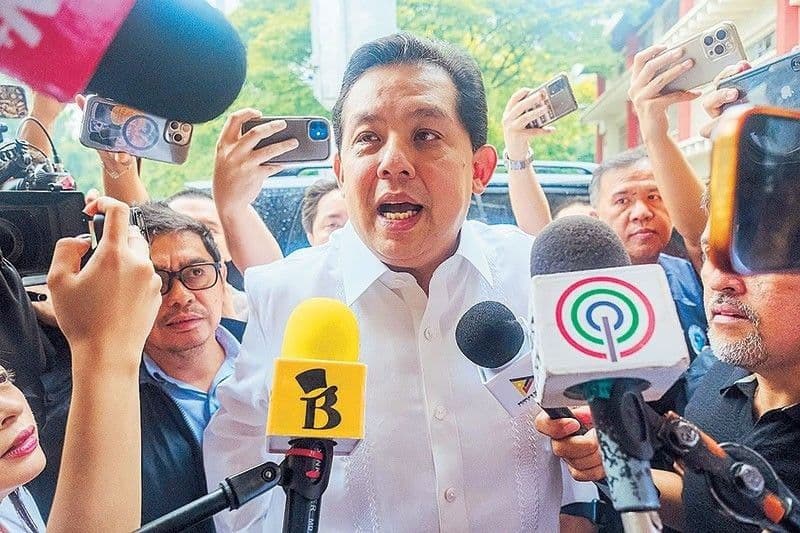
On July 28, 2026, the Ombudsman ordered former House Speaker Martin Romualdez and Zaldy Co to file counter-affidavits on flood control corruption charges involving billions of pesos. Eleven days later, on August 9, Romualdez publicly accused Ombudsman Boying Remulla of being "extremely prejudiced" against him—a charge leveled precisely as ten alleged "maleta boys" faced perjury charges for recanting their testimonies.
The procedural machinery is grinding forward, but the pattern emerging from this case reveals something more instructive than the corruption itself: the systematic infrastructure that allows powerful actors to convert legal accountability into political theater.
Consider the sequence. Counter-affidavits ordered. Witnesses recant. Perjury charges filed against those who recanted. Bail posted—₱720,000 for ten individuals, ₱72,000 per person across four counts each. And then, predictably, the subject of the investigation pivots from defense to offense, reframing procedural accountability as persecution. This is not an anomaly. This is the playbook.
Senator Lacson's identification of 32 "grossly anomalous" flood mitigation projects that failed to mitigate actual floods provides the substantive foundation beneath the procedural maneuvering. These are not abstract accounting discrepancies. These are infrastructure projects that extracted public funds while leaving communities vulnerable to the floods they were nominally designed to prevent. The corruption is not merely financial—it is infrastructural violence against citizens who trusted that their taxes would protect them.
Romualdez's defense—that he is not fleeing the Philippines and that the Ombudsman harbors prejudice—deserves examination not because it might be true, but because it exemplifies how procedural governance can be weaponized against substantive accountability. His lawyer's statement on August 2 that his client faces a preliminary investigation frames the matter as routine legal process. The accusation of prejudice on August 9 reframes that same process as political persecution. The message to observers is clear: if the investigation proceeds, it proves bias; if it stalls, it proves innocence. Heads I win, tails you lose.
The witness recantations present the starkest illustration of the accountability gap. Ombudsman Remulla dismissed the recantations as "irrelevant to proceedings"—a legally defensible position that nevertheless sidesteps the more troubling question of why witnesses recant at all. Rep. Abante's August 8 plea for alleged "maleta boys" to "tell the truth, name names" tacitly acknowledges that truth-telling in Philippine corruption cases requires external encouragement, even moral exhortation, because the institutional protections for whistleblowers remain inadequate.
Attorney Levi Baligod posted the ₱720,000 bail for the ten alleged bagmen facing perjury charges. This is verified—Baligod personally shouldered the amount, contrary to initial suggestions that the detained individuals produced the money themselves. This fact matters because it clarifies the financial mechanics: a lawyer funded the release of witnesses whose recantations the Ombudsman dismissed as irrelevant. The question of why Baligod chose to finance their release remains unanswered in the public record.
The competing frames in this case map precisely onto the tension between procedural governance and genuine accountability. Those who see "procedural accountability in motion" point to the ordered counter-affidavits, the ongoing preliminary investigation, the filed perjury charges. The machinery moves. Those who see "accountability theater masking impunity" point to the recantations, the accusations of prejudice, the decades-long pattern of high-profile Philippine corruption cases that produce indictments but not convictions, investigations but not incarcerations.
Both frames contain truth. The Ombudsman is conducting a preliminary investigation. Counter-affidavits have been ordered. Perjury charges have been filed. These are real procedural steps with real legal consequences. But the question that should concern citizens is not whether procedures are being followed—it is whether procedures, followed to the letter, can produce accountability when the subjects of investigation possess sufficient resources to fund legal teams, shape public narratives, and allegedly influence witness testimony.
The 32 failed flood mitigation projects Senator Lacson identified are not abstractions. They represent specific infrastructure in specific locations that failed specific communities during specific flood events. The corruption charges against Romualdez and Co concern these actual failures. If the preliminary investigation concludes without charges, or if charges are filed but never prosecuted, or if prosecution proceeds but convictions never materialize, or if convictions occur but sentences are suspended—at each stage, the procedural machinery will have functioned while the substantive outcome remains impunity.
Ombudsman Remulla's suggestion that the Romualdez camp may be behind witness recantations—and Romualdez's immediate counter-accusation of extreme prejudice—establishes the terrain for the coming months. The investigation will proceed. Counter-affidavits will be filed. Motions will be argued. Deadlines will be extended. And throughout, the question of whether thirty-two flood projects actually failed, whether billions of pesos were actually misappropriated, whether actual citizens were actually left unprotected by infrastructure that existed only on paper—these substantive questions will recede behind procedural maneuvering.
The burden now falls on the Ombudsman's office to demonstrate that preliminary investigation can yield prosecution, that prosecution can yield conviction, and that conviction can yield consequence. Anything less confirms what the pattern already suggests: Philippine anti-corruption procedure has become an elaborate mechanism for producing the appearance of accountability while delivering the substance of impunity.
Cover image via philstar.com.