Bank Testimony Exposes the Architecture of Philippine Financial Opacity
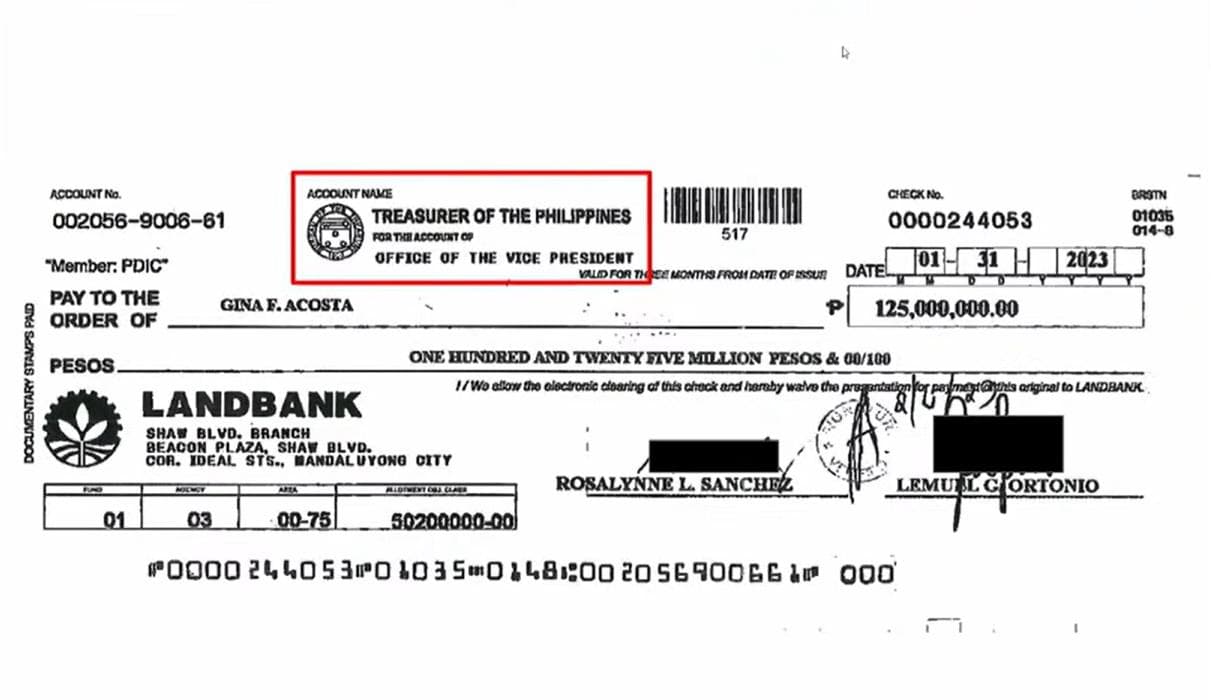
On July 29, 2026, bank officials testified before the Senate impeachment court that the Office of the Vice President's encashment of P125 million in confidential funds was "unusual"—even as they confirmed full procedural compliance with advance notice and withdrawal protocols. This single moment crystallizes the central paradox of the Sara Duterte impeachment trial: the mechanisms designed to ensure accountability are functioning precisely as designed, yet they reveal how much opacity the system tolerates by design.
The prosecution's strategy has shifted into a new phase. On July 31, House prosecutors requested alternating evidence presentation for each impeachment article rather than presenting all evidence before the defense responds. This procedural maneuver, combined with their characterization of the bank testimony as merely an "appetizer" of evidence, signals that the prosecution believes it has more substantial documentation forthcoming. The question is whether procedural architecture will permit that evidence to speak.
My claim is direct: this trial has already succeeded as an institutional stress test regardless of its outcome, because it has forced the disclosure infrastructure to perform under pressure—and exposed where that infrastructure buckles.
Consider the sequence. On July 25, VP Duterte's defense counsel invoked tax code provisions requiring presidential approval to block disclosure of tax records. This was a procedurally valid maneuver. The defense was correct that such approval was required. But this correctness itself indicts the system: why should presidential discretion gate access to a defendant's tax records in an impeachment proceeding conducted by a co-equal branch? President Marcos authorized the release on July 30, and the Bureau of Internal Revenue complied, confirming that presidential approval was indeed the statutory requirement. The Presidential Palace then distanced itself from endorsing the impeachment process itself—framing transparency as executive favor rather than legal obligation.
This is the "transparency as executive favor" frame in action, and it deserves direct engagement. The Palace's position is not illogical: the tax code does require presidential approval, and providing that approval does not constitute endorsement of the proceedings. But this frame obscures the structural problem. When transparency depends on executive grace, it is not transparency—it is disclosure at the sovereign's pleasure. The prosecution received the records this time. They might not next time. The architecture permits either outcome.
Senator Robin Padilla's accusation that prosecutors are conducting a "one-sided" proceeding merits examination. The House prosecutors rejected this characterization on July 23. But "one-sided" is a curious complaint in an adversarial legal proceeding. The prosecution presents evidence; the defense rebuts. This is not imbalance—it is structure. What Padilla's objection actually reveals is discomfort with the process itself, not with any procedural irregularity within it.
The bank testimony from July 29 demonstrates why this discomfort exists. A retired Land Bank branch manager testified that the P125 million cash withdrawal was unprecedented in her 32-year career—that government agencies typically process such transactions via check, not cash. The Commission on Audit had previously uncovered "spending anomalies" regarding these confidential funds. Yet the withdrawal complied with all procedural requirements. The advance notice was given. The protocols were followed. The money was released.
This is the architecture of lawful opacity. The procedures existed to ensure orderly withdrawal, not to ensure accountable spending. The procedures were satisfied. Whether the spending was legitimate is a separate question the procedures were never designed to answer.
Six banks submitted Sara Duterte's financial records to the Senate impeachment court on July 31. This institutional compliance—achieved through subpoena power rather than voluntary cooperation—represents the trial functioning as designed. The banks did not resist. The records arrived. The impeachment court's authority was recognized by private financial institutions even when executive branch cooperation required presidential intervention.
NBI Director Matibag's posture deserves note. On July 24, he stated publicly that he ignores critics of his testimony, framing his role as "just telling what I know." This is the correct posture for a witness in an accountability proceeding. The pressure campaigns—including VP Duterte's invocation of "hit job scenarios"—are designed to discourage exactly this kind of institutional participation. Matibag's public indifference to criticism models what witness independence should look like.
The prosecution's description of bank testimony as an "appetizer" suggests they believe the financial records now in the Senate's possession will constitute the main course. Whether they can present that evidence effectively depends on the Senate's ruling on the alternating presentation request. If granted, the prosecution can build each article's case completely before defense rebuttal. If denied, they must present all evidence across all four articles before any defense response—a format that advantages the defense by allowing them to construct a unified counter-narrative against a fragmented evidentiary record.
Here is what follows from this trial regardless of verdict: the gaps have been mapped. We now know that tax disclosure requires presidential approval. We now know that confidential fund withdrawals can be procedurally compliant and still "unusual." We now know that six banks will comply with Senate subpoenas. We now know that executive branch witnesses can testify despite pressure if they choose institutional duty over political loyalty.
The next administration—whoever holds it—will inherit this mapped terrain. The question is whether they will exploit the gaps or close them. Banking transparency reforms, statutory tax disclosure requirements for impeachment proceedings, and clearer confidential fund accounting standards are now on the table not because the prosecution has proven its case, but because the process has illuminated what the existing architecture permits. That illumination is the trial's first, permanent result.
Cover image via gmanetwork.com.