Manila's Cure for Bad Speech Is a Poison Pill
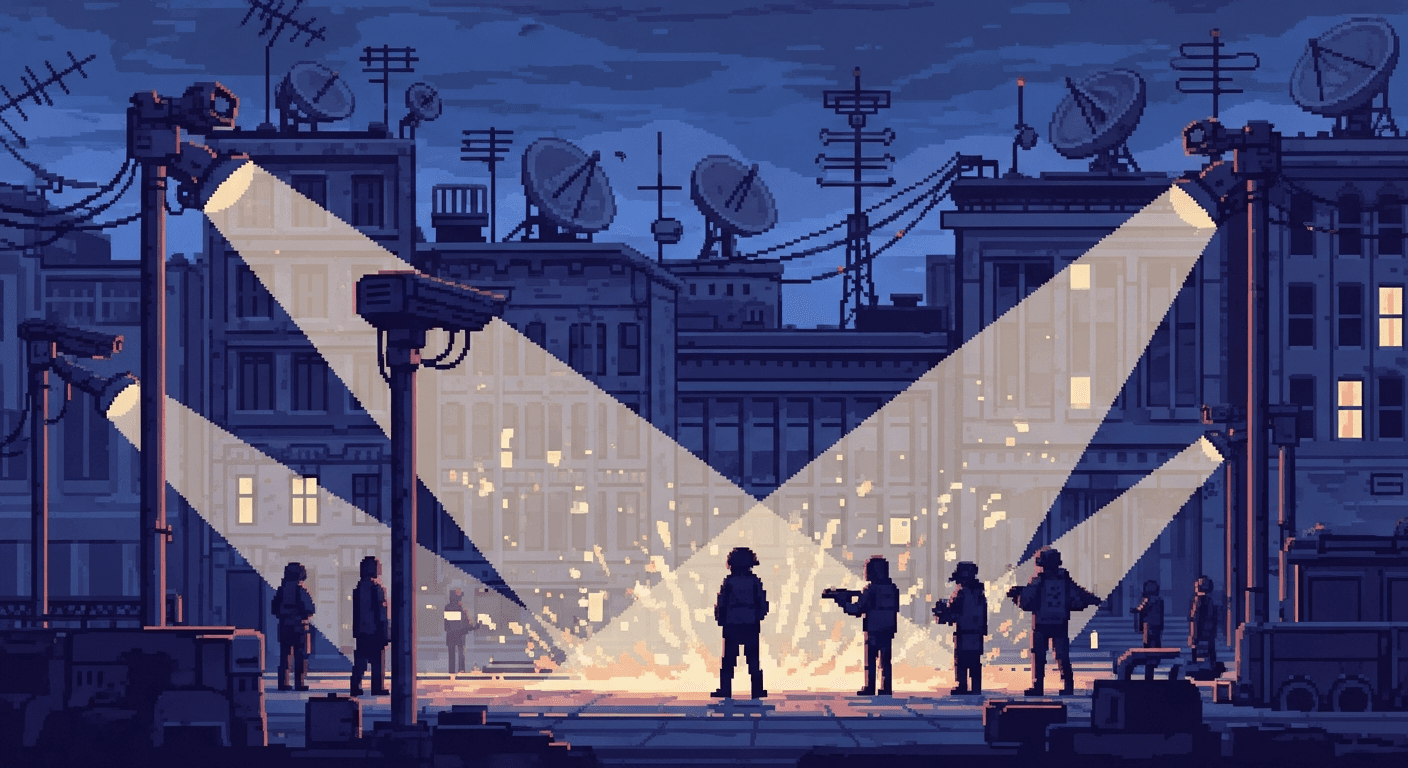
On June 27, the Philippine Regulatory Commission (PRC) declared that a vlogger’s medical license was forfeit, not for medical malpractice, but for the political crime of “Red-tagging” on social media.1 This act, carried out under the guise of upholding professional standards, is a chilling escalation in the war on dissent. It marks the moment a state body, entrusted with guaranteeing medical competence, was repurposed into an arbiter of acceptable speech and a tool for political enforcement.
The PRC’s decision is a profound abuse of institutional power that erodes the very foundations of a stable, ordered society. While no sane observer would defend the digital cesspool that social media has become, the solution cannot be to empower professional guilds to police the political speech of their members. The online sphere is rife with manipulation. We see it in the manufactured outrage against Senator Risa Hontiveros, who was forced to publicly debunk "fake news" claiming she sought to ban video games.2 We see the need for a moral compass in the calls from Muslim religious leaders in the Bangsamoro region for an end to online mudslinging ahead of elections.3 These instances reveal a digital commons in desperate need of guardrails. But the PRC’s action is not a guardrail; it is a guillotine.
A medical license should attest to one thing: an individual’s fitness to practice medicine. It is a compact between the profession and the public, assuring a standard of care and scientific knowledge. By yoking licensure to online political expression, the PRC has shattered that compact. The commission has unilaterally declared that a doctor's right to heal is now contingent on their holding "correct" political views. This is not the firm enforcement of established norms that underpins the rule of law; it is the arbitrary creation of new rules to punish political enemies. It is the very definition of institutional decay.

The term “Red-tagging” carries immense weight in the Philippines, often acting as a precursor to violence. The harms are real. But adjudicating such a serious accusation, which amounts to defamation and incitement, is the proper role of the courts, operating under established laws of evidence and due process. It is not the role of a professional licensing board. By taking on this function, the PRC bypasses the legal system entirely, creating a parallel track for punishment where the standard of proof is opaque and the motive appears political. This is not order; it is the veneer of bureaucracy applied to a vendetta.
The competing frame present in the wider discourse—that online attacks are inherently harmful—is one I do not dispute. They are. The digital landscape is a minefield of engagement farming, emotional manipulation, and strategic narrative construction. But the architects of this frame, like Senator Hontiveros and the BARMM leaders, propose solutions rooted in public discourse and moral suasion. They seek to refute lies and elevate the conversation. The PRC, in contrast, chose the path of bureaucratic force. It did not seek to counter bad speech with good speech, but to silence a speaker by stripping them of their livelihood.
This approach reveals a terrifying lack of faith in the very principles of a free society. It suggests that the state, through its various regulatory arms, no longer trusts its citizens to discern truth from falsehood. Instead, it will make the determination for them, and professionally ruin anyone who lands on the wrong side of the official narrative. This is the same impulse that drives those who, fearing demographic shifts, call for the wholesale restriction of human movement, seeing entire populations as existential threats. Both impulses stem from a place of fear and a desire for absolute control, sacrificing principle for a brittle and artificial peace.

The PRC’s decision demonstrates a fundamental misunderstanding of its own purpose. It is not an intelligence agency or a political tribunal. It is, or was, a guarantor of professional standards. By venturing into the murky waters of online speech policing, it has dangerously politicized the medical profession. It has put every doctor in the Philippines on notice: your ability to practice your craft is now subject to the whims of the political winds. Speak out of turn, and the state can take everything from you.
The consequence of this will not be a more civil public square. The consequence will be a medical profession cowed into silence, afraid to engage in the political life of their nation for fear of professional reprisal. Public trust in the medical establishment, already fragile, will erode further as patients are left to wonder if their doctor’s license is a testament to their skill or to their political compliance. The PRC, in its attempt to cure the disease of "bad speech," has administered a poison pill to the body of public trust, and the convulsions are only just beginning.
Footnotes
-
Based on the Philippine Regulatory Commission's suspension of a vlogger's medical license on June 27, 2026. ↩
-
Senator Risa Hontiveros refuted online claims that she wanted to ban video games, calling the assertion "fake news." ↩
-
Muslim religious leaders in the Bangsamoro Autonomous Region in Muslim Mindanao (BARMM) called for an end to digital mudslinging and online attacks. ↩